Zürich's Tiger Mosquito Problem Is Getting Bigger
The invasive species has now taken hold in four city districts, and authorities are scaling up their response.
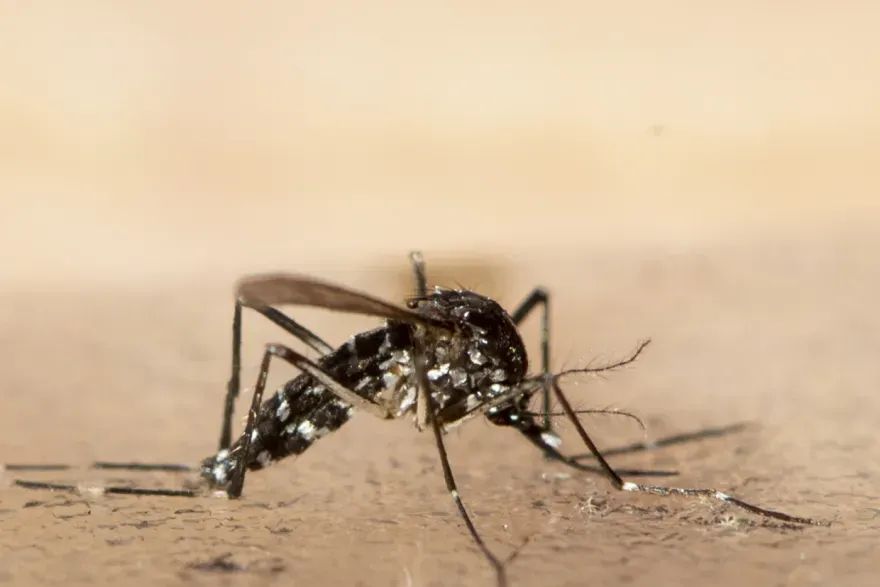
An unwelcome resident is quietly expanding its footprint across Zürich. The Asian tiger mosquito, an invasive species identifiable by the bold black and white stripes that give it its name, has now been confirmed in four neighbourhoods within the city limits, prompting cantonal authorities to deploy additional monitoring traps across affected areas.
The insect's advance into Zürich has been gradual but steady. It was first flagged in the Friesenberg district last year, though by that point it had already been documented in Wipkingen, Hirslanden and the industrial Kreis 5 going back to 2024. Local authorities responded by notifying residents and treating street drains to eliminate larvae — a targeted intervention that showed some results. In Wipkingen, the measures appeared to work: no eggs were detected in the area last year, with only a single specimen reported further along the Limmat.
The species is no stranger to Switzerland. It first arrived in the country in 2003, establishing itself in the southern canton of Ticino — a warmer, more hospitable climate for a mosquito originally native to the forests of southeast Asia. Its gradual northward creep into urban Zürich reflects a broader pattern seen across central Europe, where rising summer temperatures are making previously inhospitable regions increasingly viable territory.
Unlike the common mosquito, the tiger mosquito is a more aggressive daytime biter and is known in other parts of the world as a vector for diseases including dengue and chikungunya — though transmission risk in Switzerland remains low for now.
Cantonal authorities have not indicated whether further interventions beyond expanded trapping are planned for this season.
Report based on publicly available cantonal health monitoring data, Zürich, April 2026